
Commemorating Native American Heritage Month 2023
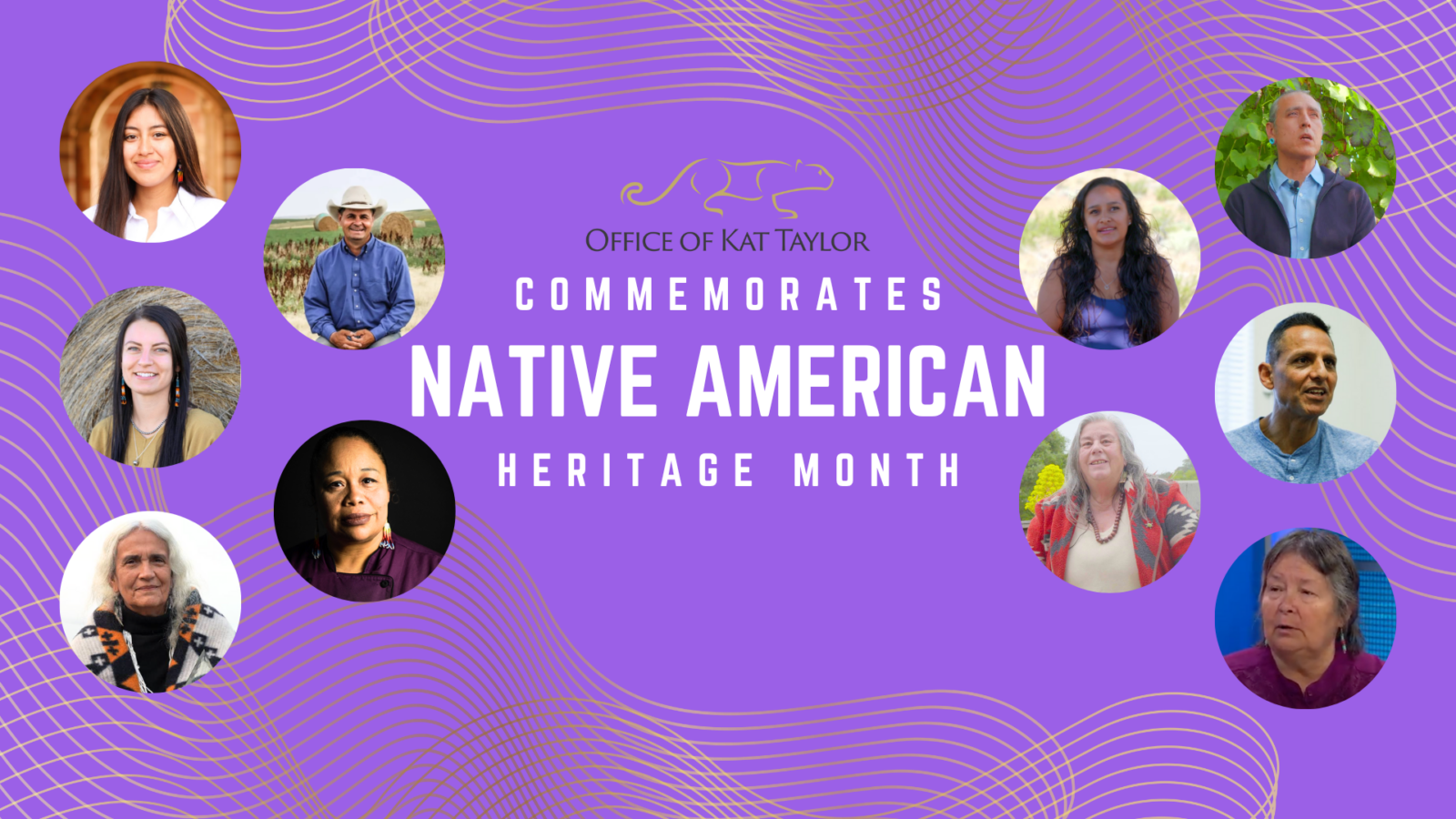
National Native American Heritage Month is observed every November; it’s a time to recognize the traditions and contributions of indigenous communities. Despite centuries of oppression, exploitation, and violence, indigenous communities in the United States continue to advocate for equity and justice for all. Over the past year, the Office of Kat Taylor has been honored to learn and work alongside Native American partners and organizations. Read more about some of the inspiring leaders below.
Judge Abby Abinanti – Yurok Tribe
Judge Abby Abinanti is a master manifester and purveyor of justice. She is known as one of the first indigenous women to pass the California state bar exam and become a judge, but her true legacy lies in her courage of conviction and strength of character. A member of the Yurok Tribe, she served as Chief Tribal Court Judge and focused on finding justice for murdered and missing Indigenous People. She has pioneered culturally relevant court services and expanded access to services that would otherwise not be available.
Her commitment to ensuring native peoples are not only represented, but also respected in the American legal system is why many regard her as a trailblazer in the field. She has devoted herself to training the next generation of legal professionals as an educator at UC Berkeley and Stanford. We have had the opportunity to become immersed in her work with The Village SF, an initiative of the Friendship House of American Indians, that will serve as a home for non-profit organizations and community members to provide access to health care, cultural resources, and housing to nearly 18,000 Native Americans living in San Francisco.
Tlayecantzi Marcos Aguilar – Executive Director, Anahuacalmecac International University Preparatory of North America
Aguilar serves as the Executive Director of Anahuacalmecac International University Preparatory of North America, located in south Los Angeles. The role of the school is to teach and share Native wisdom, and cultivate a lifelong appreciation of the cultural and intellectual heritage of Indigenous Peoples. The school started from humble beginnings with just 139 students in El Sereno Park without a building to hold classes in, and has grown into so much more. It recently hosted a celebration to mark the repatriation of 12 acres of land to the Gabrielino Shoshone Nation of Southern California, its original stewards.
Marcos has been an educational leader for over three decades, first as a prominent student activist in the nineties, then as a history teacher in the Los Angeles Unified School District, and finally as the head of the Anahuacalmecac school. The school is a beacon of cultural enrichment in the community, and was a critical food hub during the pandemic, distributing thousands of pounds of nutritious produce to their Southern LA community in partnership with our Growing the Table program. Aguilar strives to provide students with an effective and globally inclusive curriculum within a positive supportive learning environment involving students, teachers, parents, and staff. Read more about their most recent successes here.
Ary Sanchez-Amaya – Educator, Anahuacalmecac International University Preparatory of North America
Sanchez-Amaya hails from a family of Indigenous farmers and medicine People. She serves as an educator at Anahuacalmecac International University Preparatory of North America, the only Indigenous school in Los Angeles, where she helps Indigenous students understand their relationships to land while living in an urban environment. Much of America’s indigenous population today live in cities, not on reservations. She focuses on Indigenous environmental science and has helped develop the first of its kind curriculum, Science is Ceremony: Indigenous Youth Research Academy.
Sanchez-Amaya is deeply passionate about integrating Indigenous ecological knowledge systems and western understandings of plant ecology. Her research aims to address the effects of climate change on urban terrestrial ecosystems using both remote sensing and traditional Indigenous ecological knowledge. We had the distinct pleasure of partnering with her and her colleagues at the Anahuacalmecac school through Growing the Table, distributing fresh produce to indigenous communities in Los Angeles.
Peter Bratt – Board Member, Friendship House SF
Bratt is a very active member of Friendship House SF, and recently helped secure $750,000 to fund a cutting-edge, six-story housing development in the Mission District of San Francisco called The Village SF. Bratt was born and raised in San Francisco by a strong, Indigenous single mother. Peter’s family was part of the American Indian Occupation of Alcatraz, the Wounded Knee stand-off, and the Farmworkers Movement.
We were proud to co-produce the Emmy nominated “Dolores” with Bratt, a documentary film about Dolores Huerta and the farmworkers movement. Through artistic depictions like La Mission, Corazon De America, and Follow Me Home, Bratt has always sought to depict relatable stories that inspire others to take action.
Skya Ducheneaux – Founder, Akiptan
Skya Ducheneaux currently serves as the Executive Director of Akiptan, an organization focused on transforming Native agriculture and food economies through loans and technical assistance that enhances prosperity for indigenous communities. Her team’s focus has been on providing Native Youth loans or Investments to ensure younger generations start to grow their Agriculture Operation. Ducheneaux is an enrolled member of the Cheyenne River Sioux Tribe and spent her early years working as a cattle rancher on the CRST Reservation in South Dakota.
Ducheneaux left home to pursue both her Bachelor’s and Master’s in Business Administration. Upon her return from college she worked for the Intertribal Agriculture Council, which led to her passion in ensuring Native communities, the original stewards, have access to capital in order to run successful agricultural operations. As of May 2023, her team was responsible for distributing roughly $16 million through 240+ loans to mostly native-owned and operated farms and ranches. We’ve had the pleasure of learning from Skya in a community of best practice, collaborating on the importance of investing in Regenerative Agriculture in indigenous communities and beyond.
Zach Ducheneaux – Administrator, USDA FSA
Zach Ducheneaux is an incredible public servant, and cultural icon in the agricultural world, who continues to inspire through action in support of small family farms and ranches across the country. A member of the Cheyenne Sioux Tribe, Ducheneaux fought for the economic and social welfare of many Native American tribes in his previous role as the Intertribal Agriculture Council (IAC) Executive Director. During his time at the IAC, he built a reputation as one of the most respected voices speaking to improve non-industrial agriculture in indigenous communities and beyond.
He and his family operate a fourth-generation ranch on their reservation in South Dakota. His mission holds at its heart agricultural practices that best serve the land, the living things on that land, and those who steward it. He was appointed Administrator for the USDA’s Farm Service Agency in February 2021. In his role, he continues to lead a national network of offices that provide loan programs, assistance with the adoption of policies, and a suite of other critical services that allow small family farms to continue nourishing our communities.
Cata Gomes – Muchia Te’ Indigenous Land Trust
Cata Gomes is a treasured partner of TomKat Ranch Educational Foundation, and a member of the Ramaytush, Bay Miwok, and Salinan Tribes. She and her colleagues host basket weaving workshops at TomKat Ranch to honor ancestral cultural practices and reclaim language. Gomes is a leader in the Muchia Te’ Indigenous Land Trust, which is committed to restoration of natural and cultural resources in Ramaytush and neighboring lands.
Her tribal homeland “Timigtac” or “home of the whales” is in present-day Pacifica. Through storytelling and acknowledgment of the trauma from genocide, her people and other Native nations, Gomes seeks to educate the community on the importance of Indigenous and modern day stewardship practices that truly respect the land. You can read more about Cata in this KQED story.
Maria “Liz” Hernandez – Board Member, Modoc Harvest
Liz Hernandez currently serves as an Associate Tribal Technical Assistance Program Manager for the California Coalition of Rural Housing. She is a member of the board of directors for Modoc Harvest, one of our Growing the Table partners, to deliver fresh produce to members of her tribe and closeby rural communities in the Surprise Valley near the border with Oregon. The partnership also included a holistic management program, farmer recruitment, garden education workshops, and school food program support.
Hernandez is well-respected in and outside of the Fort Bidwell Indian community. She has also served as a Tribal Council Leader for the Fort Bidwell Indian Council for the past six years. She is a member of the Northern Paiute tribe, whose population was reduced to only a staggering 112 people as of 1969, due to genocide, land theft, cultural assimilation, and colonization. She is proud to be revitalizing her community that saw its first Pow Wow for the first time in over a decade.
Carol Wahpepah – Executive Director, Intertribal Friendship House
Wahpepah has worked with indigenous communities for over 40 years and is the current Executive Director of The Intertribal Friendship House (IFH) in the Bay Area. The mission of the IFH is to promote the ability of Native people to thrive in an urban environment through ceremony, traditions, and cultural connections. She is particularly proud of the IFH Urban Rez Youth Leadership Council, which offers an opportunity for Native youth to learn and develop the skills that build power, self-determination, and collective voice.
Wahpepah sees racial healing and equity as paramount to revitalizing Oakland and other Bay Area communities. IFH and Wahpepah hope to continue the legacy of her ancestors through pow wow dance, drumming, beading classes, and the many social gatherings, cultural events, and ceremonies that rebuild these communities. Read more about her work here.
Crystal Wahpepah – Founder, Wahpepah’s Kitchen
Crystal Wahpepah is the owner and founder of Wahpepah’s Kitchen in Oakland, California. Aside from being a renowned chef, she is a community advocate and enrolled member of the Kickapoo nation of Oklahoma. She is most notably known for being the first Native chef to compete on the popular Food Network show, Chopped. Her culinary work is grounded in food justice and proves that native foodways that once existed can be rebuilt.
Wahpepah’s food is not simply for nourishment, but also for education and exploring health benefits of good food serving as medicine for the body and mind. She sources produce from indigenous farmers and encourages agricultural practices that work with natural systems on land, in the long-standing indigenous tradition.