
Black History
In The Making 2024:
Seanicaa Edwards Herron
In The Making 2024:
Seanicaa Edwards Herron
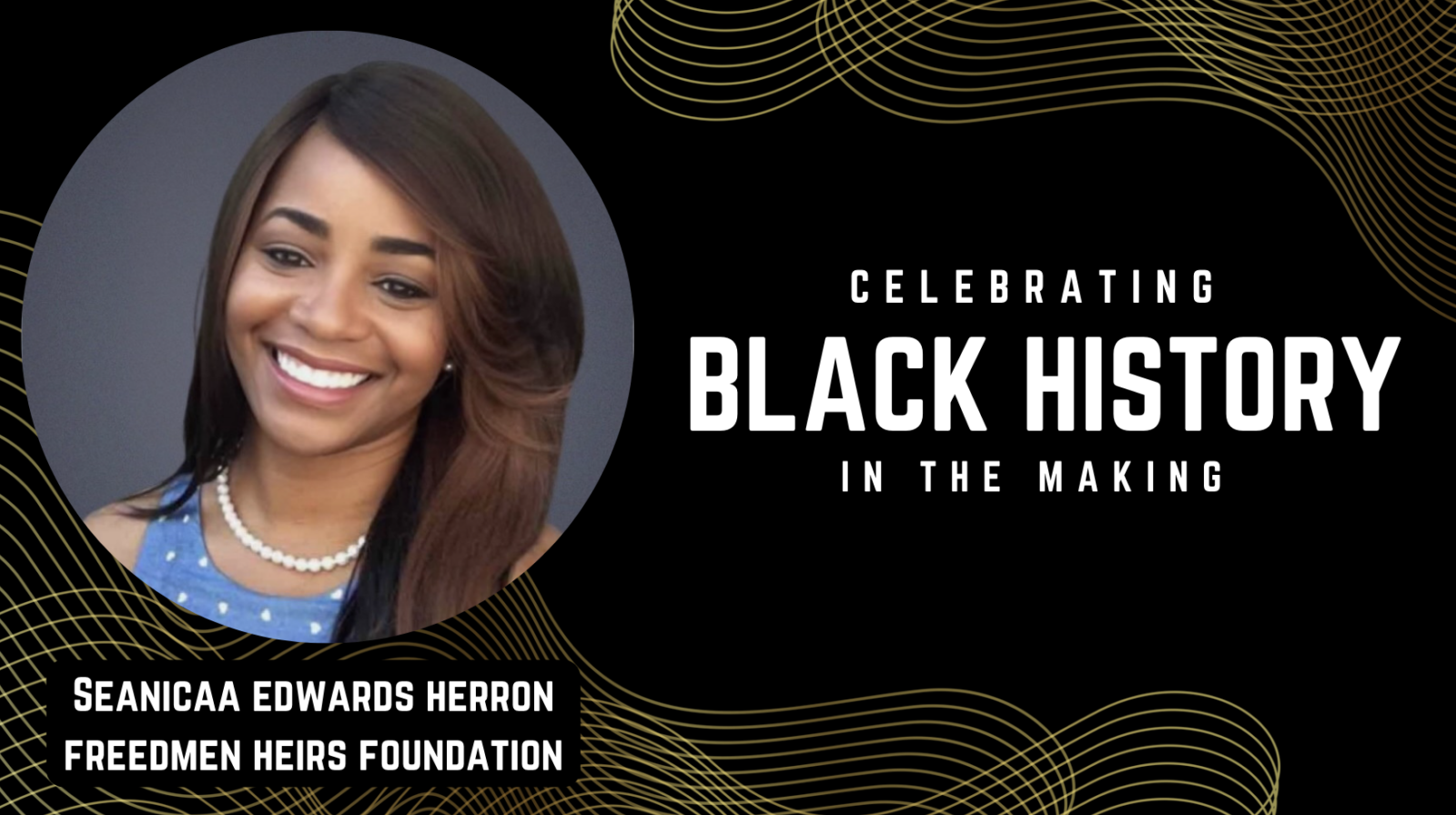
Black History Month presents an opportunity to remember the Black icons who have paved the way for us in every realm and industry. While acknowledging the contributions of leaders past, this year, we would like to give a nod to those who walk among us now. We sat down with four Black changemakers, who are using their skills and spheres of influence to extend the ladder, and lifting us all up with them.
Our first interview was with Seanicaa Edwards Herron. Ms. Herron is the Founder and Executive Director of Freedmen Heirs Foundation, a nonprofit organization with a mission and vision to promote the prominence, profitability, and sustainability of Black-owned farms and farmers. She is an agricultural economist with nearly 20 years of agribusiness experience across the academic, private, and government sectors. Below is an excerpt from the interview.
If there was one singular thing you could change about the current food system from a racial justice perspective, what would that be?
Equity for Black farmers. Support for Black farmers. These are things that are near and dear to my heart. The system has not been equitable towards Black farmers. They haven’t been supported in the way that they need to be supported currently. We know what the problems are. We know what the issues are. There have been enough needs assessments and reports done to pinpoint certain things. But we have to walk it like we talk it. If we say we’re gonna support them, we need to support them. The story of Black farmers needs to be amplified more – not just the struggles. Black farmers are resilient. However, the things that they’ve had to overcome warrants support in so many different ways just to level the playing field. And so, for all those with the means and resources to support them, I think they should funnel those resources and support them.
How does the intersection of Blackness and womanhood inform your work, and how do you maintain the resilience that you have?
Agriculture is traditionally a male-dominated field. Being a woman and then being a Black woman at that, of course, there are challenges that are unique to what we face as individuals, and you definitely have to have thick skin and resiliency because there are gonna be times when the door is going to be shut in your face. You may get people that don’t want you in this space or you may get shut out of invitations or different things. You know that this is just how the world is. And so being able to stand in who you are – like, I show up as Seanicaa every day. I show up as a Black woman every day. I’m gonna be me regardless. And so I think for any minority woman that’s coming into this field and wanting to do the work, knowing what you’re up against, but also knowing that you can overcome those barriers…You can make changes in this field. There are so many other opportunities. However, I would be remiss if I said, “This is so wonderful. Come on over here.” No. I have experienced some things that were shocking, and that have caused me to take a couple of steps back. But once I gain my bearings I always remember who I am. I’m Seanicaa Edwards Heron – and so, I always get my footing and then I keep moving.
So, I think it’s important for women, Black women especially, in this space to know who you are when you get into the agriculture industry and that is what’s gonna keep you moving regardless of what anyone says, or the no’s, or the missed opportunities, so to speak. Because a missed opportunity may be just a redirection to something better. Knowing who you are and staying true to yourself is what keeps me grounded every day. I can show up every day and I can go to sleep at night and rest well knowing that I showed up as myself and I gave it 100%.
Do you have any other thoughts that you want to put out there?
Black history is 365 days for a lot of us and it should be amplified 365 days. Black history is American history and I think sometimes that gets lost. And thinking about how this country, the relationships between African-Americans, enslavement, agriculture, you know, that’s all intertwined. Let us not forget about those who were enslaved to build agriculture that we understand and know in the United States today. Let us lift our voices and amplify those farmers and their descendants who are still farming today and just amplifying Black farmers’ Black history, 365 days of the year.