
Driving Change in California: Legislative and Budget Advancements in 2025
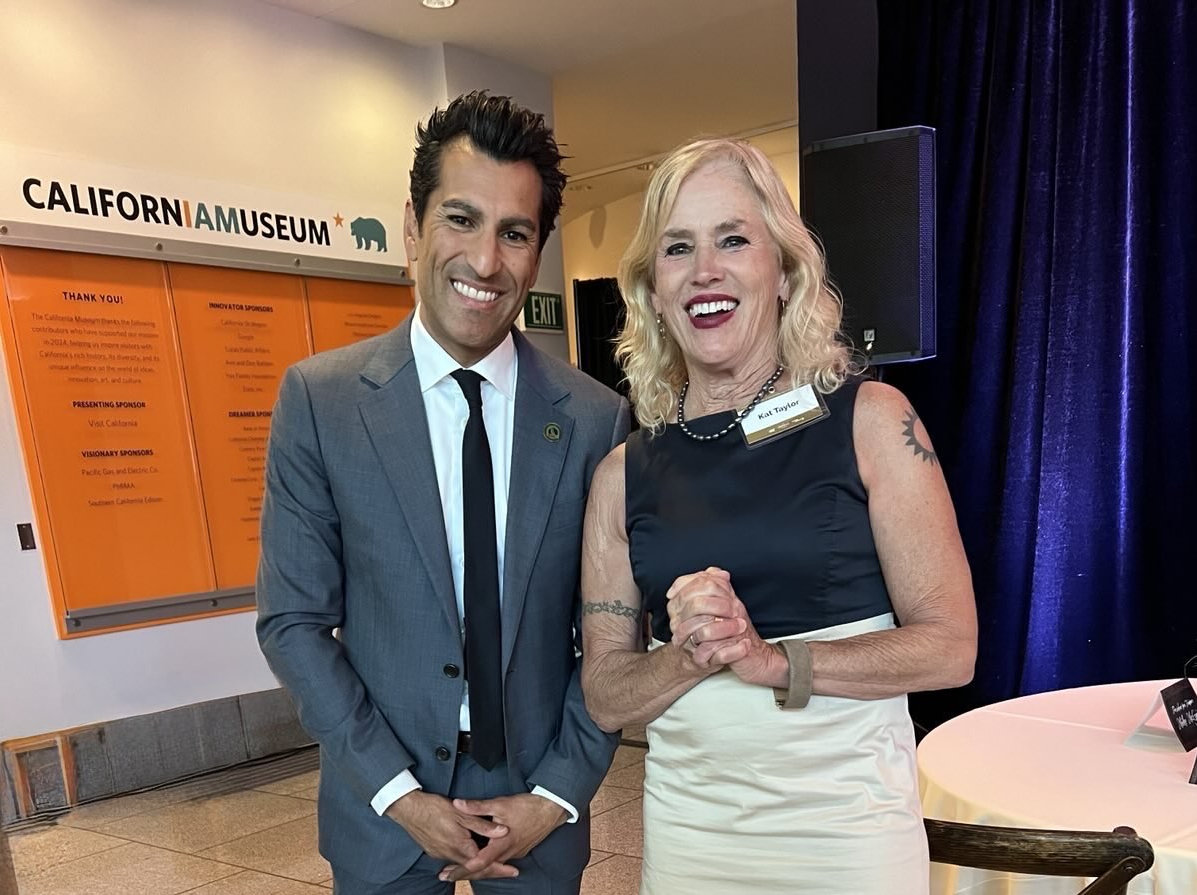
In a monumental year for the Office of Kat Taylor, we, alongside our critical partners, advanced legislation and budget appropriations that benefit all Californians. We successfully supported chaptered legislation and secured budget investments that champion resilient and healthful food systems, regenerative agriculture, and consumer protections. We are deeply grateful to our partners on the ground whose expertise and dedication make this work possible. Their leadership continues to guide our efforts towards social justice, environmental well-being, and a more equitable and inclusive world.
Here are some of the bills and state investments we supported this year that were recently signed into law by Governor Newsom:
Cultivating Diverse and Resilient Food Systems
AB 1264 (Gabriel) — The Real Foods, Healthy Kids Act
AB 1264 protects the health of school children by phasing out “particularly harmful” ultra-processed foods (UPFs) from school meals. Building on our previous work to advance the School Meals for All program, the first-in-the-nation bill reflects California’s dedication to child and school nutrition across the state. The bill will take on the incredible task of identifying UPFs through collaboration with CA state scientists. The bill continues to maintain California’s gold standard of school nutrition and gives us another opportunity to prioritize California-grown products and the health of our children.
AB 1207 (Irwin) — Extension of Climate Change Market-Based Compliance Mechanism
AB 1207 reauthorizes the Cap-and-Invest Program through 2045 and makes practical reforms to reduce costs for farmers and families while keeping the state on track to achieving climate goals. The revenue generated by this program has provided critical funding for important agricultural programs, and the long-term reauthorization ensures continued support. Additionally, the bill pushes for carbon neutrality, reduces electricity bills year-round, and diverts allowances from the fossil fuels industries.
SB 840 (Limón) — Greenhouse Gas Reduction Fund Studies
SB 840 ensures stable funding for important agricultural and nutrition programs critically funded by Cap-and-Invest and advances elimination of dubious Cap-and-Invest offsets. More specifically, the bill requires the California Air Resources Board to re-evaluate offsets and alternatives under the Cap-and-Invest program and establishes a framework for the Greenhouse Gas Reduction Fund appropriations. Programs receiving continued funding will include the Affordable Housing and Sustainable Communities Program (AHSC) and associated Sustainable Agricultural Lands Conservation Program (SALC), the Safe and Affordable Drinking Water Fund (SAFER), and AB 617 Community Air Protection Program (CAPP).
AB 411 (Papan) — Caring About the Terrain, Livestock, and Ecosystems (C.A.T.T.L.E) Act
AB 411 ensures equitable access to carcass disposal by small-scale ranchers. Previous law prohibited the composting of “unprocessed mammalian tissue,” forcing ranchers who lacked access to regulated carcass burial and faced the reality of on-farm livestock mortality to let carcasses decompose in large piles. Such ranchers can now compost these carcasses instead, severely reducing predator attraction to farms. This option is cheaper, more environmentally friendly, and promotes regenerative agriculture—it will result in improvements to affordability and health across the state.
SB 279 (McNerney) — Expansion of Solid Waste Composting
SB 279 combats emissions by increasing composting capacity in California: small-scale growers and community composters now have greater flexibility in managing agricultural waste. The bill addresses the combination of restrictions on composting agricultural materials on-site and the ban on agricultural burning in the San Joaquin Valley that had throttled the ability of growers to dispose of biomass. Community composters were similarly limited in the amount of material they could compost. SB 279 cut the green tape, giving power to growers and community composters to implement local solutions. Growers can now responsibly manage large-scale biomass removals through composting, providing a climate-friendly alternative to burning and an opportunity to engage in the compost market. Community composters can now expand to fill a greater local need.
Changing the Financial System for Good
SB 825 (Limón) — DFPI Financial Protection Expansion
SB 825 protects Californians from unlawful, unfair, deceptive, or abusive acts or practices (UDAAP) by all financial institutions. The bill is a natural extension of AB 1864 (Limón, 2020), the bill that transformed the California Department of Business Oversight into the Department of Financial Protection and Innovation (DFPI). California law already prohibited unlicensed financial institutions from engaging in UDAAP, with the understanding that regulation of licensed institutions was enforced by the federal Consumer Financial Protection Bureau (CFPB). The bill would clarify that DFPI is able to enforce UDAAP against licensed institutions as well following the CFPB’s shuttering, ensuring transparency and fair business practices.
Investments in Schools Meals for All Implementation
Governor Newsom and the California Legislature have maintained full funding for the School Meal for All (SMFA) program, along with critical additional funding for kitchen infrastructure, workforce training, and recruitment. These sustained investments are vital for addressing childhood hunger and enhancing student educational outcomes. As California households continue to struggle with affordability, the SMFA program is essential: 44% of food-insecure families in California do not qualify for federal school meal assistance, making this a crucial state-level safety net for children’s food security. In short, SMFA is one of the quickest and simplest levers to address our cost-of-living crisis by immediately putting money back in the pockets of families when their kids eat for free at school.
The enacted 2025–2026 California State Budget continues this commitment with the following investments in school nutrition programs:
- $1.93 billion for School Meals for All, which will serve a projected 1 billion school meals to California’s TK–12 students next year.
- $160 million for the Universal School Meals Implementation Support Grant, which prioritizes:
- $145 million for Kitchen Infrastructure and Training (KIT) to support schools in maintaining and updating kitchen facilities and providing staff training to serve more freshly-prepared, California-grown school meals.
- $10 million to support the retention and recruitment of food service workers, and
- $5 million for a study of ultraprocessed foods.
The Legislative and Budget accomplishments of the Office of Kat Taylor would not have been possible without all of our partners. Together, we were able to advance policies and state investments to improve sustainable agriculture, make school meals healthier, secure funding for essential programs, and make financial systems more fair. Thank you to our legislative champions — Governor Newsom, First Partner Siebel Newsom, Senate pro Tempore McGuire, Assembly Speaker Rivas, and Budget Chairs Assemblymember Gabriel and Senator Wiener — for their deep commitment to our shared vision of a California for All.
We look forward to accomplishing even more next year alongside our partners, allies, and policy leaders.