
Black History
In The Making 2024:
Quinn Williams
In The Making 2024:
Quinn Williams
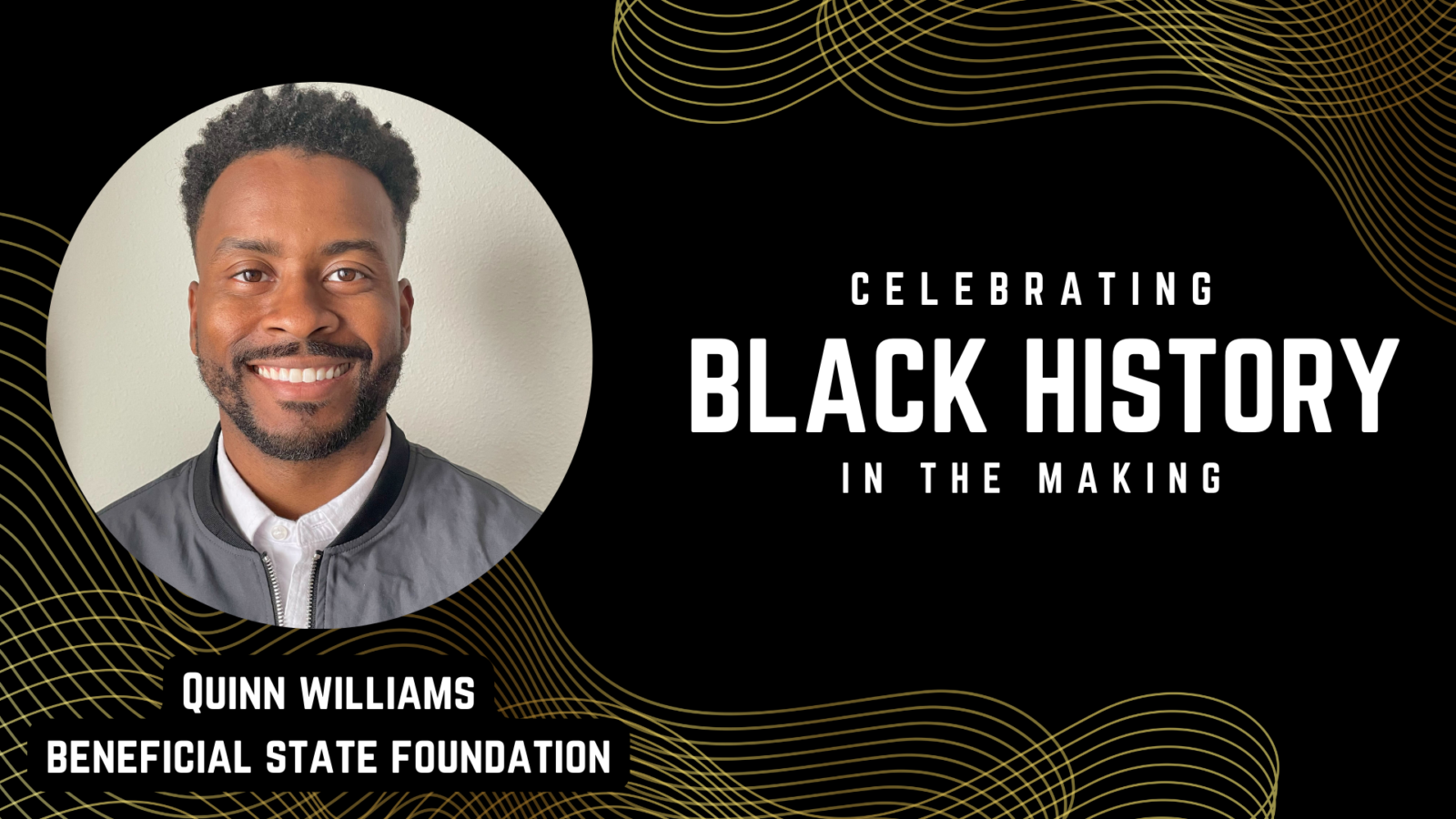
Black History Month presents an opportunity to remember the Black icons who have paved the way for us in every realm and industry. While acknowledging the contributions of leaders past, this year, we would like to give a nod to those who walk among us now. We sat down with four Black changemakers, who are using their skills and spheres of influence to extend the ladder, and lifting us all up with them.
Our fourth and final interview was with Quinn Williams. Mr. Williams is the Director of the Equitable Bank Standards program at Beneficial State Foundation. His work includes co-development and refinement of standards, and supports the Foundation’s overall policy advocacy. He started his career in Colorado advocating for policies that empower working families. Quinn is committed to increasing access to capital in Black communities, particularly in the South where he is from. Below is an excerpt from the interview.
How did you get involved in banking?
I started in policy advocacy. I just started with the lens that Black people don’t have enough. Communities don’t have enough. Low-income folks don’t have enough. I just automatically thought, you’ve got to go and talk to people who are experiencing these problems and do something, which led me to community organizing. So, community organizing was a direction that I went in because I just thought that’s the way change happens.
I have a Master’s in Public Policy as my foundation, but the way I got into banking is that I became disenfranchised or disillusioned. Disillusioned with the whole process of what organizing organizations sometimes have to do during the presidential cycles. The money flowing in to get out the vote, and the need to have a close connection with the political arm, and to tell people that the world is broken, that the economy is broken, that different things are broken.
I think one of the key parts of the economy being broken is that it’s not broken as much as it’s working for certain people. The way I came to banking is being like, “All right, banks play a key role in what’s happening in finance. Finance plays a key role in what’s happening in everyone’s lives. How do I get to it?”
I saw the position for a program manager. I was already at an organization that was working in the intersection of Wall Street accountability and racial justice, but it was very research focused… I wanted to figure out how we go directly towards the industry and change it. So, that’s how I ended up in this position. I came because of the mission.
I wonder if there is anyone, whether it’d be a Black historical figure or someone just in your life who guided you along this path that you’re on today?
Oh, for sure. I mean, there is one individual – Howard Thurman – he taught at Morehouse. He went to Tufts University. He was a theologian, and he was one of the first people that talked about interfaith coalitions. I want to create a community for people of every faith, any faith, no faith. He had this particular worldview around love. He would say, “Love or perish,” and that we have to step outside of our own selves and step into the shoes of other people and see ourselves from the other side. That is what love is. A lot of his underpinnings had to do with, “How do we have this agape love towards humankind?”
I think I tend to apply that in my thinking of how… I would like the world to be set up. I would like for people to look at their brethren that are, you know, darker skinned people, or people with different abilities, as well as all vulnerable populations, and look at those folks with the love that Howard Thurman talked about. I believe in creating spaces where people of any faith, of any background can come and show up and feel welcomed and feel that belonging.